Green & circular economy · Palm resource supply chains
Palm residues, organized into reliable industrial supply.
R360.green is a specialized ecosystem for the green and circular economy and palm-resource supply chains. We connect the sources of palm residues with the needs of industrial partners — collecting, sorting, preparing and supplying material to agreed specifications and acceptance criteria.
30 years of field experience · since 1996
100,000+ tonnes/year contractable supply
GCC & North Africa focus · inquiries worldwide
From Palm Residues to Industrial Supply
What we do
From scattered palm residues to specified industrial feedstock
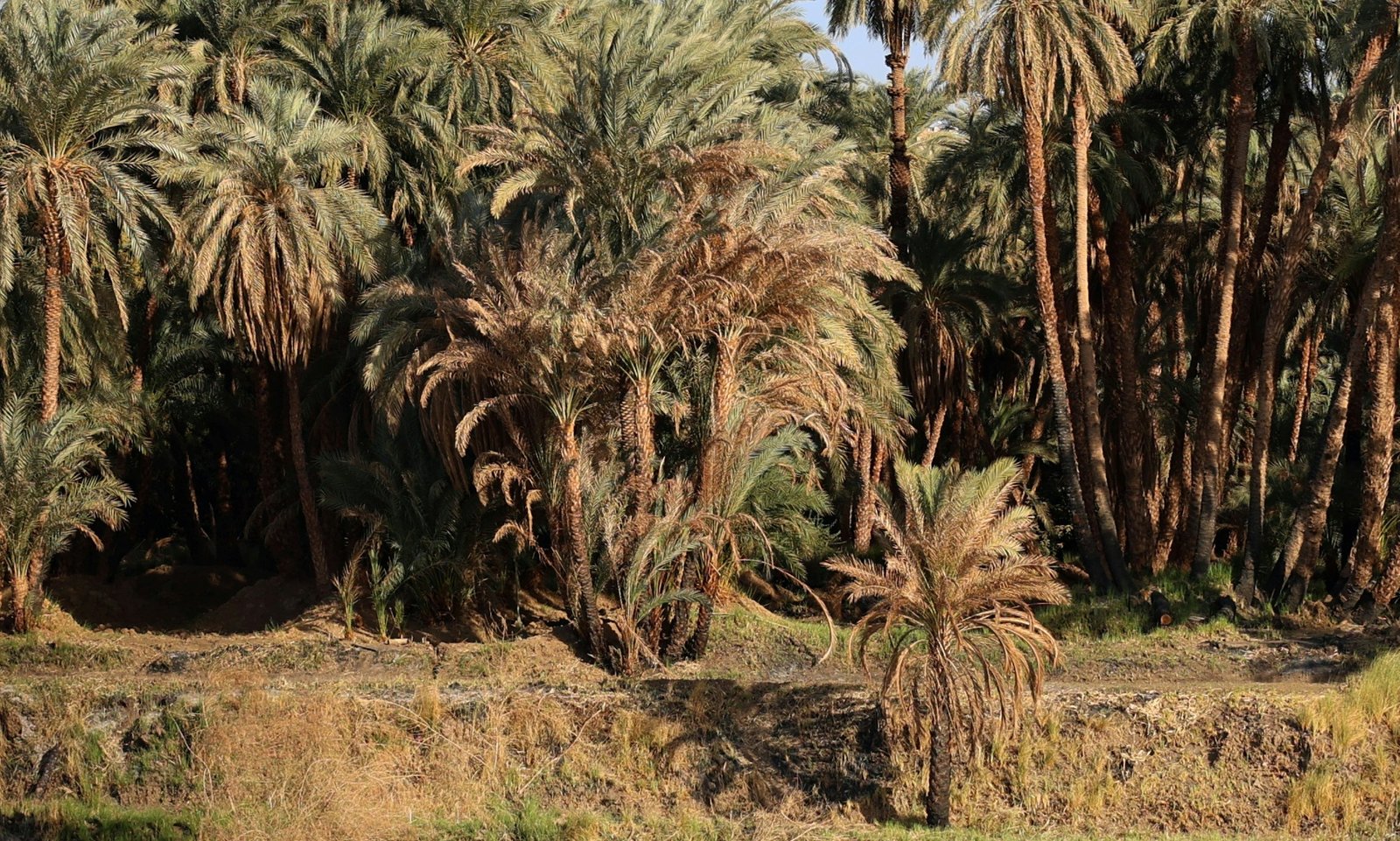
Date palms generate large volumes of fronds, midribs, leaflets, trunks and fibers every year. Left unmanaged, much of it is burned or left to decompose. R360.green turns this material into organized supply: collected at source, sorted and graded by material type, prepared and stored, then delivered to factories and specialized users against the specifications, quantities and acceptance criteria agreed with each partner.
01
Collect
Palm residues are gathered from farms and sources and consolidated at handling points.
02
Sort & grade
Material is separated by type and graded to the requirements of its industrial use.
03
Prepare & store
Sorted material is baled, bundled or bagged and stored ready for dispatch.
04
Supply
Partners receive material to agreed specifications, quantities, schedules and acceptance criteria.
Resources, capacity & growth
A large regional resource, organized step by step
We distinguish clearly between the resource that exists in the region, the supply we can contract today, and the capacity we are building.
Regional resource base
7M+
tonnes of palm residues a year
Generated across the GCC and North Africa, based on R360.green field estimates and our knowledge of the sector.
Contractable capacity
100,000+
tonnes a year
Supply we can organize and contract today across several material types, according to specifications and agreed supply arrangements.
Growth target · 2031
500,000
tonnes a year
Planned collection, preparation and supply capacity within five years, built through wider collection networks, preparation sites, partnerships and contracts.

Founder-led expertise
Thirty years of hands-on work with palm resources
Said Alwardi
Founder & Ecosystem Director
Said Alwardi began working with palm resources in 1996. Over three decades he has built practical experience in collecting, sorting and putting palm residues to productive use — from the Al Baydar activity launched in 2005, to organized recycling systems from 2008, to the broader platform that took shape in 2011. R360.green brings this experience together as a specialized ecosystem for industrial partners.
1996
2005
2008
2011
2018 · WIPO Geneva
International participation
Palm heritage presented at WIPO in Geneva
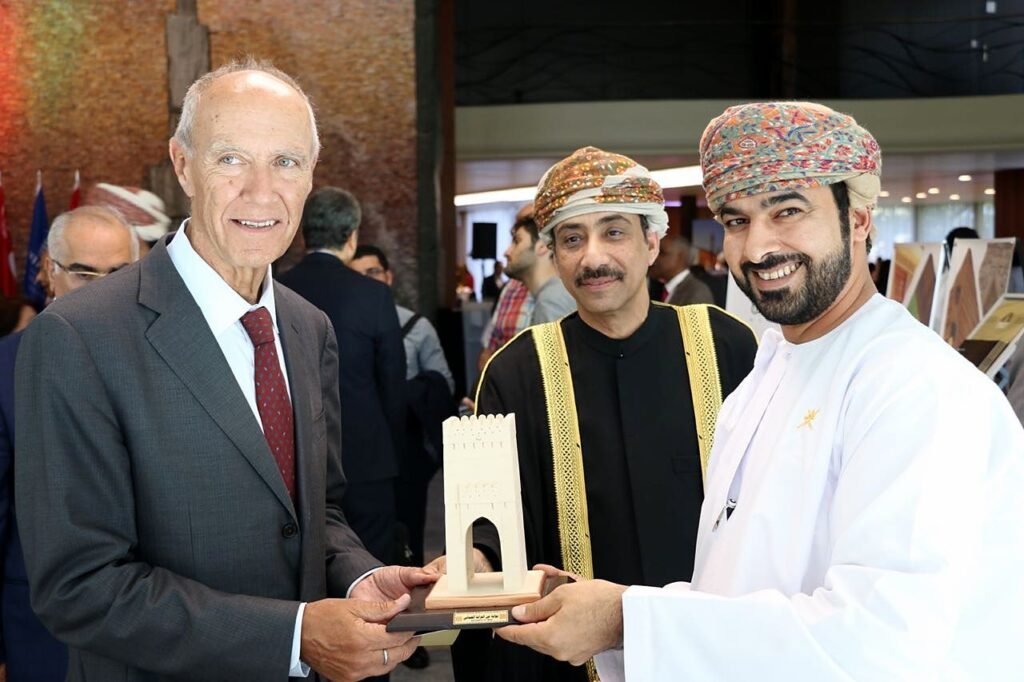
In 2018, Said Alwardi took part, in connection with Al Darwaza, in an event at the headquarters of the World Intellectual Property Organization (WIPO) in Geneva — one of the milestones in the founder’s journey with palm resources.
Palm resources
Palm materials we organize for industry
Each material has its own properties and uses. We handle them as distinct streams so that every supply matches its intended application.
A
Palm fronds
Leaves and midribs — the largest residue stream from palm maintenance and pruning.
B
Palm trunks
Trunk material from felled or replaced palms, handled as a separate stream.
C
Palm fibers
Fibrous material from the palm, suited to fiber-based and composite applications.
D
Other by-products
Leaflets, midrib bundles and other residues, supplied on request.
Availability varies by material type, season and source, and is confirmed for each requirement before supply is agreed.
Collection, sorting & supply
Supply built around your specification
We start from what your process needs — material, form, quality, volume and delivery schedule — and organize collection and sorting to meet it.
01
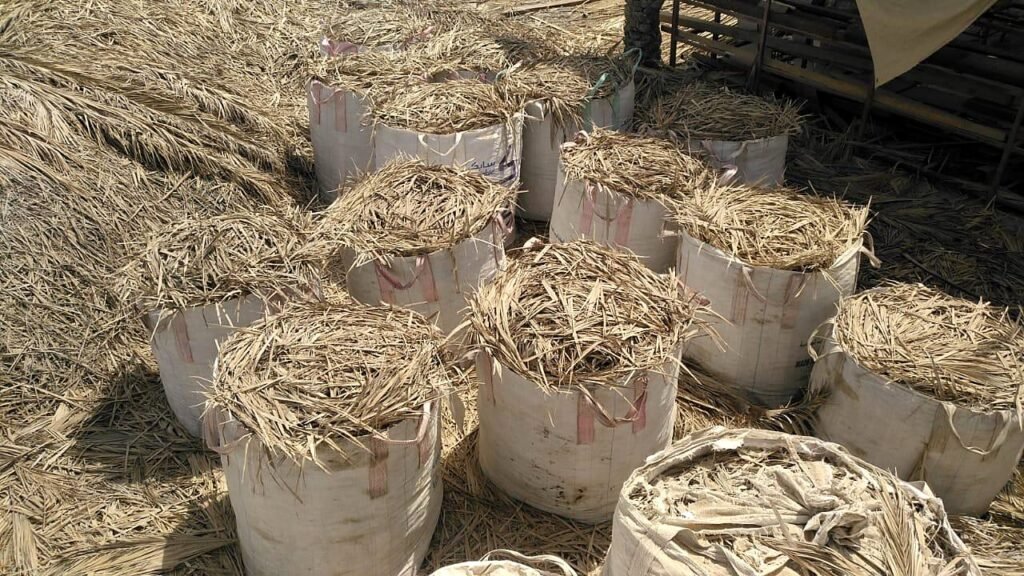
Collection at source
Palm residues are gathered where they are generated and brought to consolidation points.
02
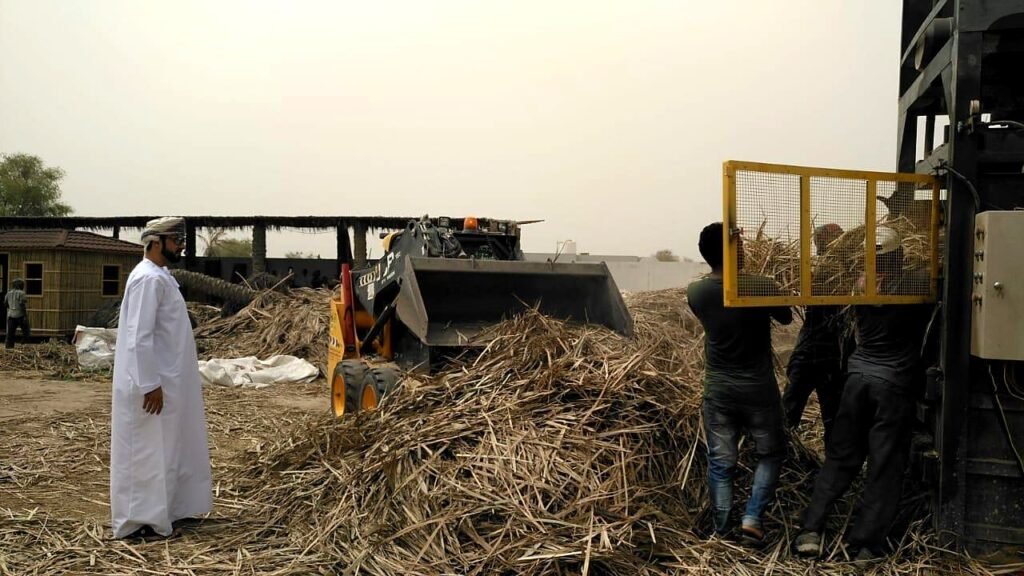
Sorting & grading
Material is separated by type and graded to the needs of each industrial use.
03
Baling & storage
Material is compressed into bales, bundled or bagged, then stored ready for dispatch.
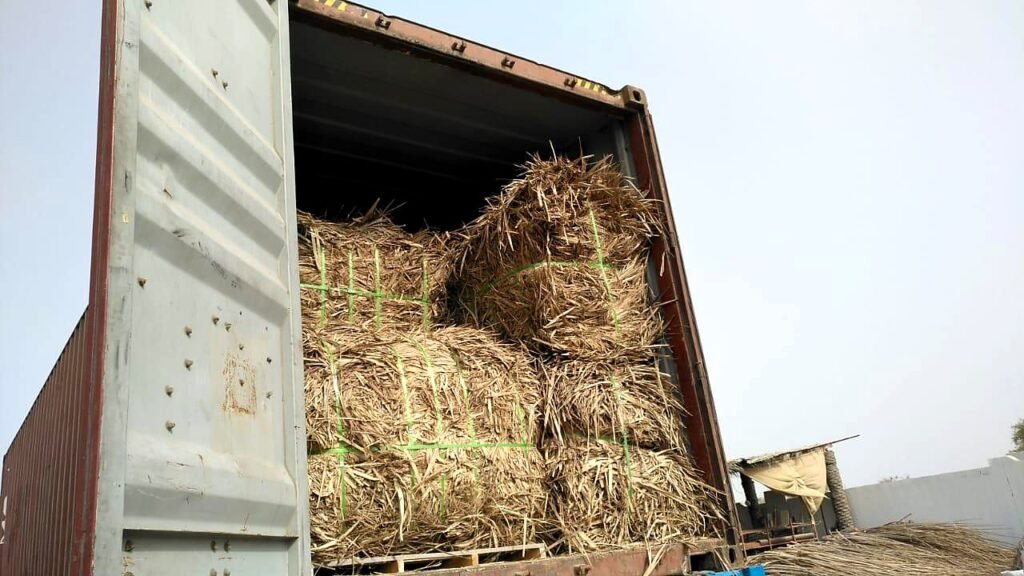
04
Loading & supply
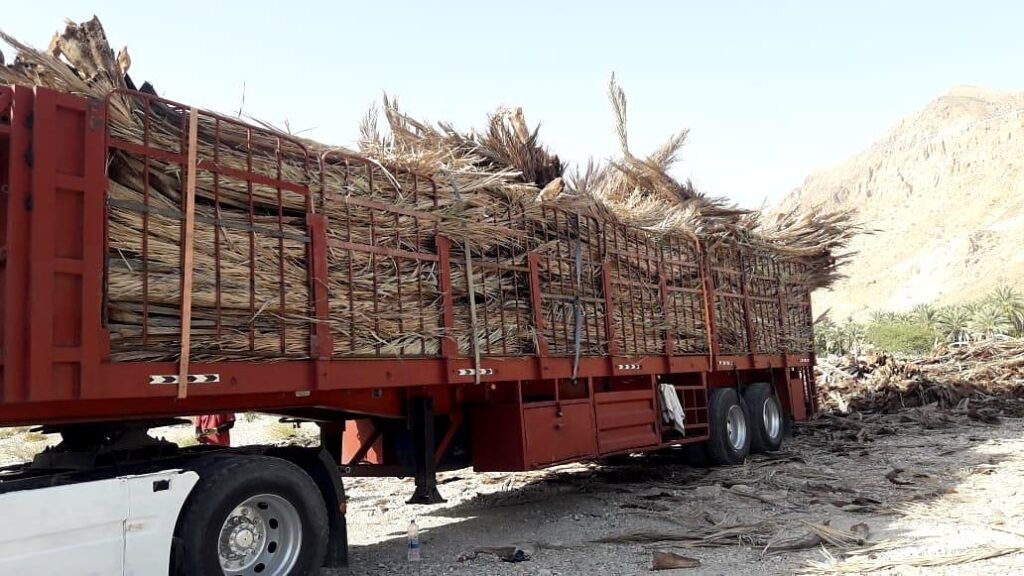
Loads are prepared to the agreed quantity and schedule for road or container transport.
Field photos from collection, sorting, baling and loading operations.
Industrial applications
Where palm materials create value
We supply prepared palm material to manufacturers and specialized users. Processing into end products is carried out by those industries and our partners — some pathways are established uses, others are being developed together.
Priority pathway
Carbon & biochar
Feedstock for biochar and carbon products used in agriculture, water treatment and energy.
Complementary
Agri inputs & soil
Organic and carbon-based inputs for soil improvement and compost.
In development
Fiber, paper & packaging
Fiber-based products, packaging and bio-composites.
Long-term
Advanced materials
Insulation, lightweight and composite materials through research collaboration.
Impact
Less burning. Less waste. More useful material.
- Reduces open burning of palm residues and the emissions it causes.
- Limits methane from uncontrolled decomposition.
- Turns a disposal problem into traceable industrial feedstock.
Partnerships & supply
Let’s work together
We welcome industrial, technical, research and commercial partnerships, and supply requests from specialized manufacturers anywhere in the world. Our sourcing focus is the GCC and North Africa; each destination is assessed for its logistics and regulatory requirements.
For manufacturers
Tell us the material, specifications, annual quantity and delivery destination you need.
For partners
Industrial, technical, research or commercial collaboration around palm resources and their applications.
Or email us directly: said@r360.green