
Industrial applications
Palm materials for industries that can use them
Palm residues can serve as raw material across several sectors. We supply the prepared material. We do not manufacture paper, packaging, fiber products or biochar; that is done by the factories and specialists in each sector.
Industries we supply
Where palm materials go
Each industry has its own material requirements. Suitability is confirmed by sample and specification.
We supply the feedstock
Biochar & carbon producers
Palm material for biochar and carbon production, used by those producers for agriculture, water treatment and energy applications.
We supply the feedstock
Compost & soil-input producers
Organic palm material for compost and soil-improvement inputs.
We supply the raw material
Paper & pulp mills
Palm fiber and leaflets as an alternative raw material. Paper is made by the mill.
We supply the raw material
Packaging manufacturers
Palm material for fiber-based packaging. Packaging is made by the manufacturer.
We supply the raw material
Fiber & composite manufacturers
Fiber and midribs for fiber products, panels and bio-composites, made by those manufacturers.
On request
Other sectors
Advanced-material research, and regulated products such as hygiene and healthcare consumables, where a specialized manufacturer asks us to assess a material. These are not products we offer.
Have another application?
If your process can use any part of the palm, tell us about it. We review new uses case by case.
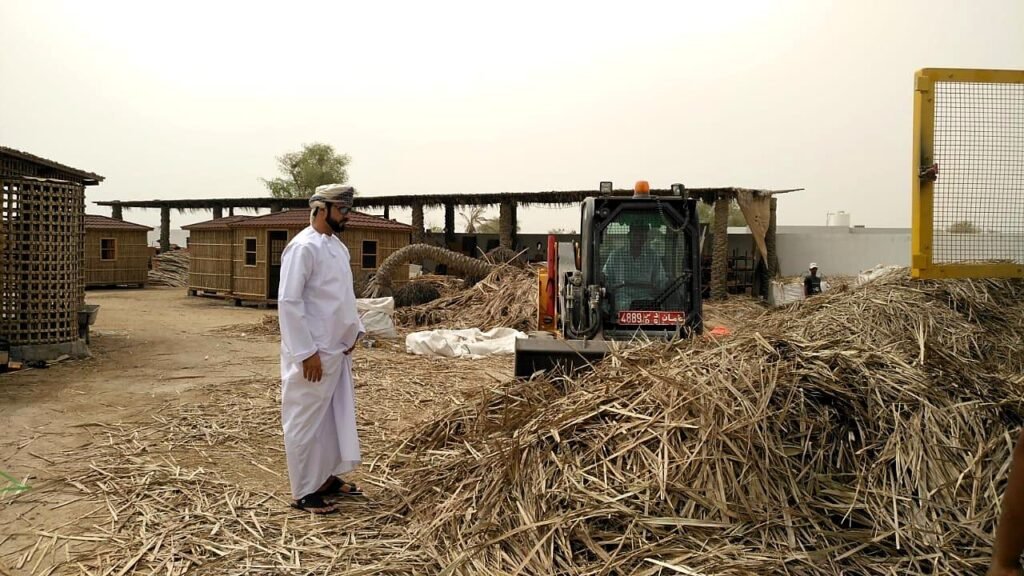
Palm materials in practice
Experience with real palm-based products
Our understanding of industrial requirements comes from years of working with palm materials directly — from handling and baling to structures, panels and crafted pieces built from palm midribs and natural palm rope.
How we engage
Supplier, partner or collaborator
Manufacturers and institutions can work with R360.green in the way that fits their needs:
- Supply agreements — prepared palm material to your specifications and volumes.
- Industrial partnerships — joint development with a manufacturer.
- Technical and research collaboration — testing materials and processes for new uses.